The Concept
Art: Axur Eneas | Colors: Sean Callahan | Letters: Chas! Pangburn | Writer: James E. Roche
The first chapter of Knockturn County came together differently from anything I’d written before. Instead of starting with a script, I started with the dialogue — specifically, the rhyming narration.
Since I wanted the entire story to be driven by rhyme, I worked on that first. You can see it in my longhand, barely-legible chicken-scratch: I was working in anapestic tetrameter (unstressed - unstressed - STRESSED, four times per line) while simultaneously picturing exactly what would happen in each panel.
Writing to a Rhyme Scheme
The challenge with rhyming narration isn’t just making words rhyme — it’s making the rhyme serve the story instead of fighting it. Every line had to earn its place both as a story beat and as a rhythmic unit.
I knew the overall tale I wanted to tell, so I could focus on pacing each page around the rhyme scheme rather than the other way around.
How the Creative Process Unfolded
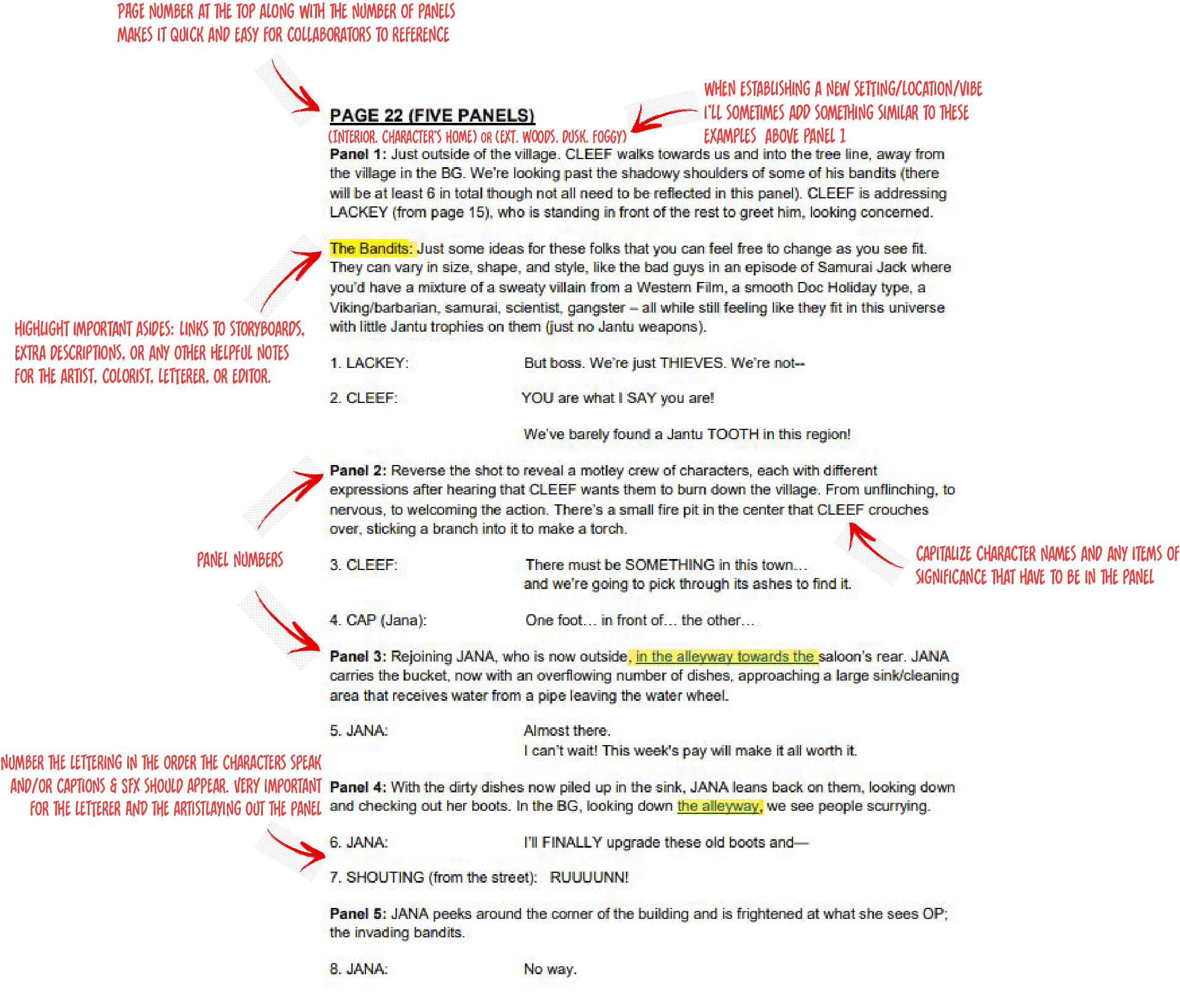
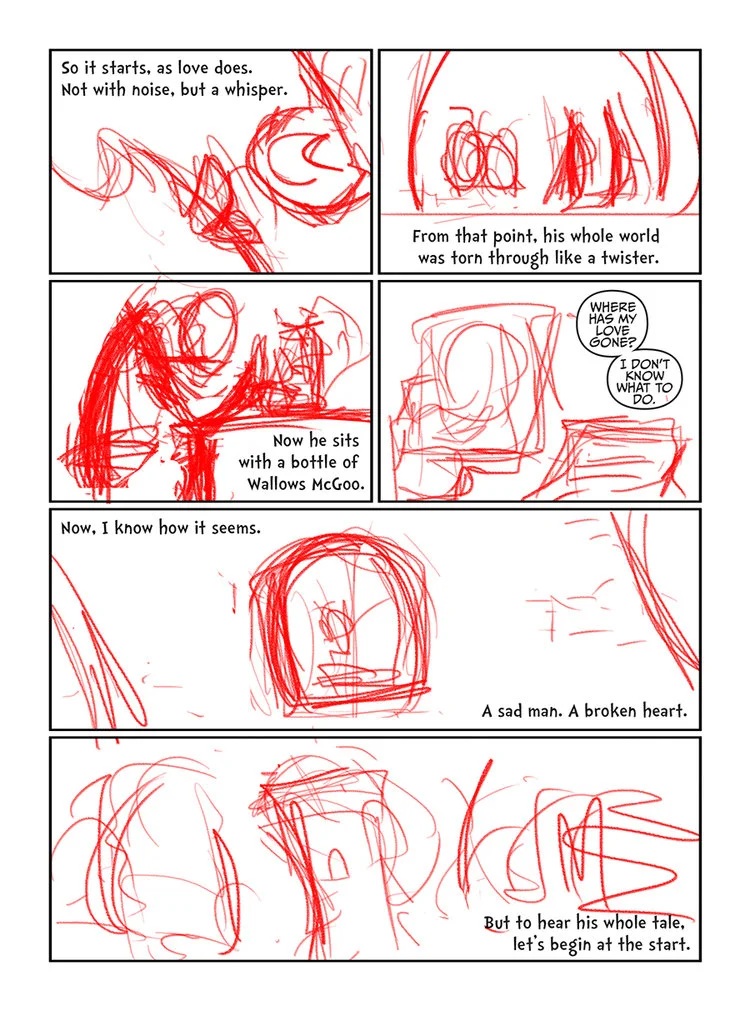
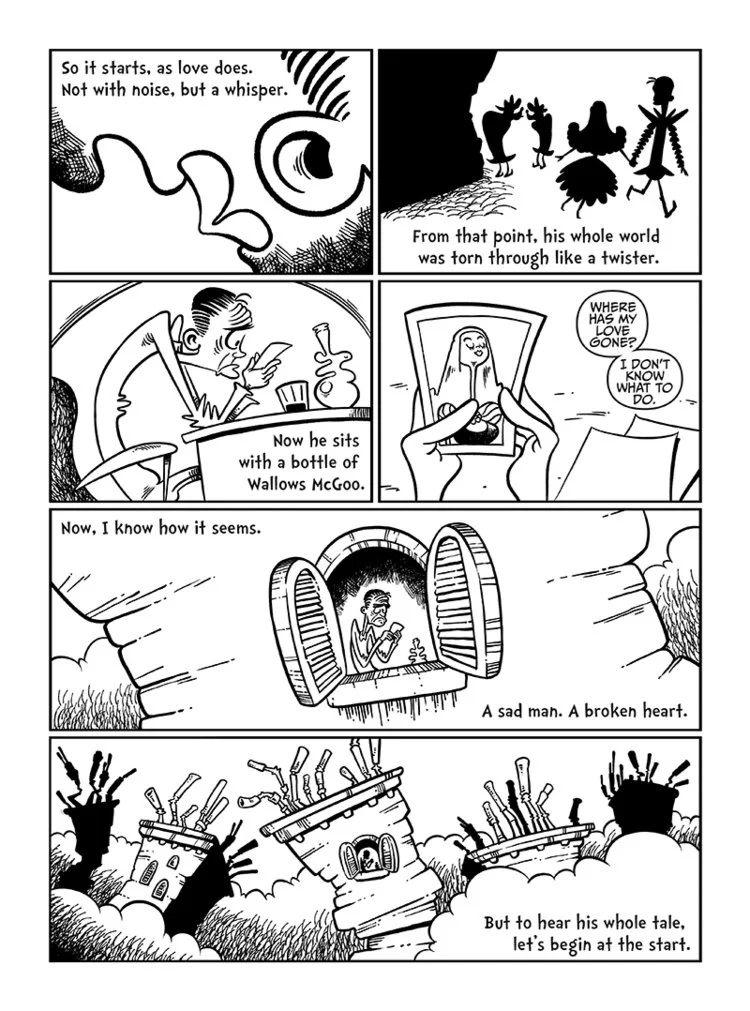
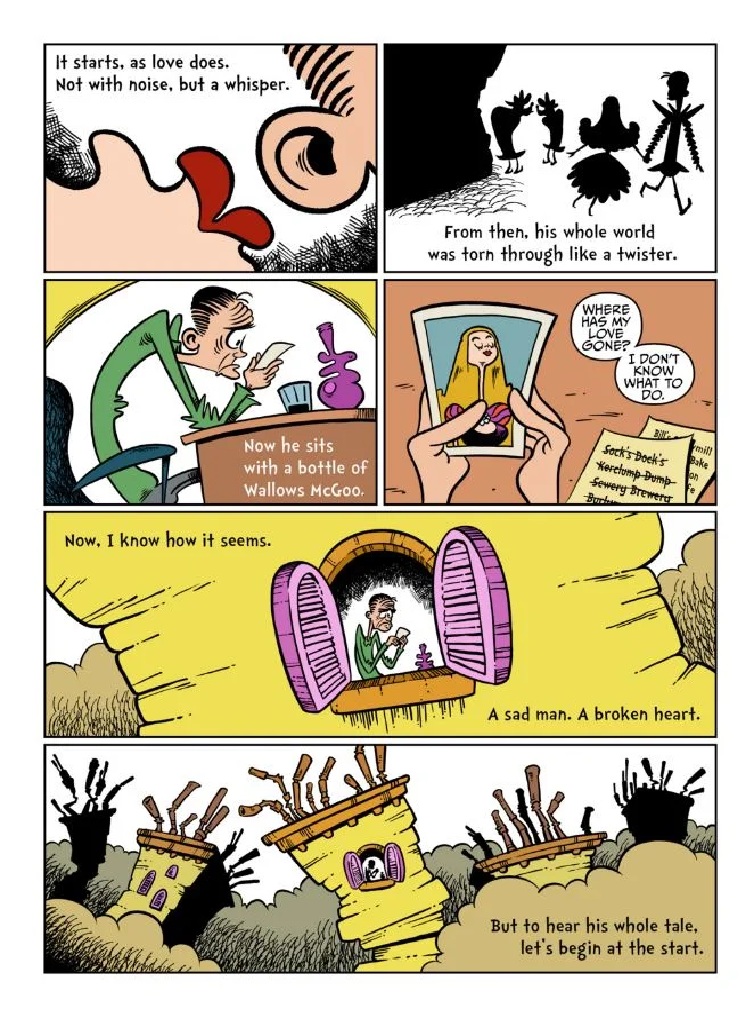
Once I had the narration typed up and legible, Axur took over. The script was always a guide, not a rulebook. I let him do his magic.
The workflow looked like this:
- Rough lettering first — Chas! placed the narration boxes early since the text was complete from day one (unusual for comics). This let everyone see exactly how much panel space the artwork had to work with.
- Rough lines — Axur laid out panel borders and rough linework around the lettering.
- Straight to inks — Axur went directly from roughs to inks, far exceeding expectations and establishing the visual tone for this gritty, whimsical world.
- Colors — We wanted something minimalist, children’s book-adjacent. Sean Callahan came in and delivered exactly that.
The Takeaway on Collaboration
The script should always serve the artist, not constrain them. What you write is the foundation. What the artist builds on top of it — and around it, and through it — is the actual comic.
Giving your collaborators room to surprise you is one of the best things you can do as a writer.