How My Scripts Evolved
My scripts have come a long way since I first started writing comics. At first, I copied the format from a Marvel script book. Then, over time, it evolved through years of collaborating and writing into what it is today.
I don’t close the door on new tweaks — whatever makes the collaboration between myself and the creative team more streamlined is a huge plus.
As always, there’s no RIGHT way to do it. This is just how I do it and how it’s worked for my collaborators and me. Hopefully you find something useful here for your own process.
What a Page of Script Actually Looks Like
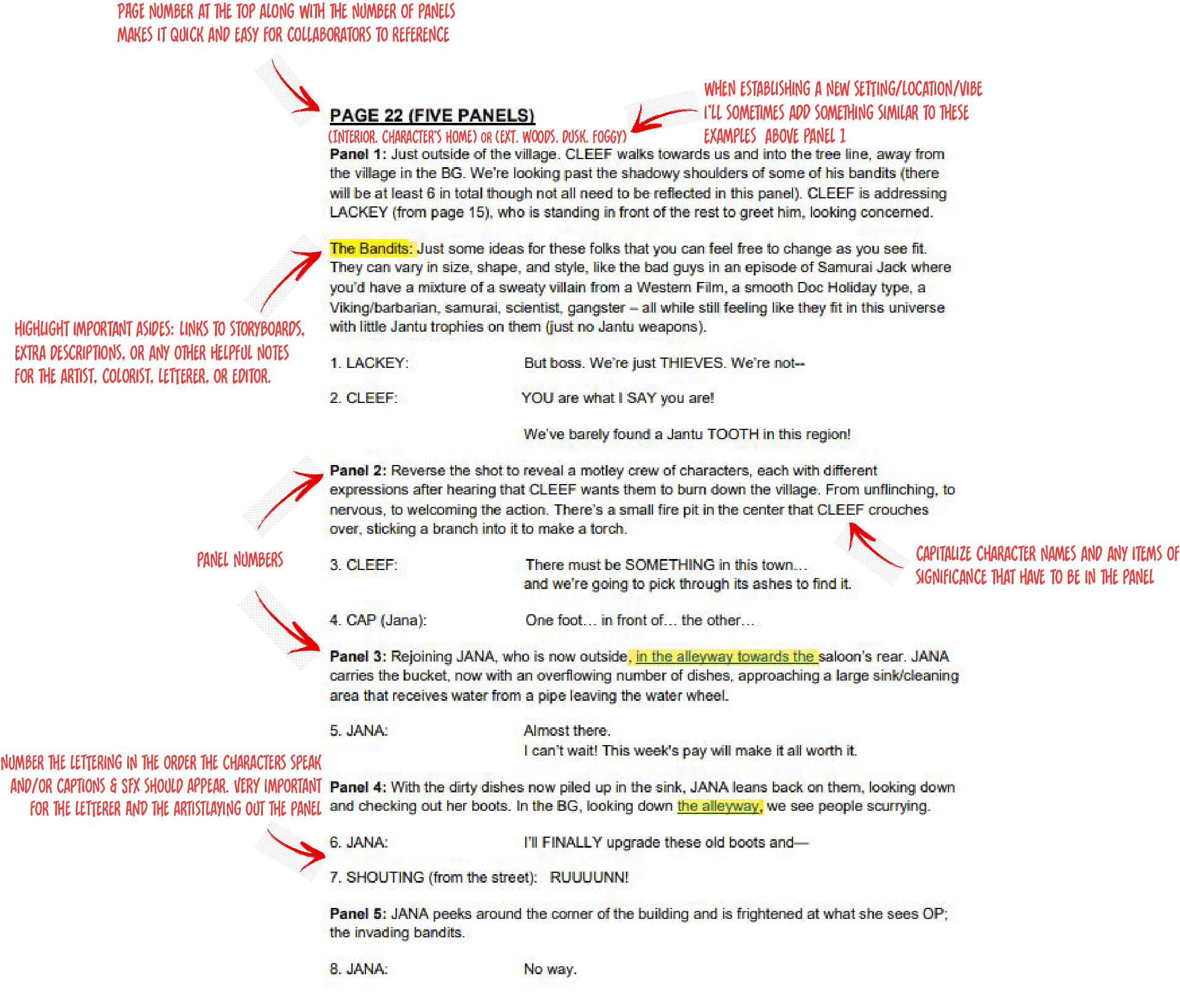
A page from JANA: And the Tower of Want shows how I structure each page — panel descriptions, dialogue, and notes for the artist are all clearly separated so there’s no guesswork.
The key principles I follow:
- Clarity over cleverness. The script is a communication tool, not a creative showcase. If the artist has to guess what you mean, you’ve already lost.
- Panel descriptions should be visual, not cinematic. Comics aren’t film. You’re describing a frozen moment, not a moving scene.
- Leave room for the artist. Over-describing kills collaboration. Describe what matters, trust the artist with the rest.
The Structure I Use
Each page of script follows this order:
- Page number — always at the top, bold
- Panel number and description — brief, visual, present tense
- Dialogue and captions — numbered to match panel, character name in caps
- Notes — bracketed, used sparingly for anything that needs clarification
The trouble with tracking all of that yourself is that it pulls you out of the writing. Every time you stop to check whether you’re on panel four or five, you’ve left the scene and become an administrator. It’s only a second or two, but it’s a second or two hundreds of times a script, and each one costs you the thread. That’s why I built a free comic script writing tool — not to save the keystrokes, but to keep me in the craft instead of the formatting.
Advice for New Writers
The format matters less than the clarity. A clean, readable script in any format will get you further than a “correctly formatted” script that’s confusing to navigate.
Start with a format that makes sense to you, then adjust based on feedback from the artists you work with. The best format is the one your collaborators can work from without asking questions.
Check out my YouTube channel for more tips on the full process of writing comics.